Some patients stay with you in a special way. This nice lady came to me needing a lot of dental work, and over time I restored her whole mouth with crowns, veneers, and implant crowns. The final step was replacing three missing teeth on her lower right side with an implant bridge, and I was so happy to restore her smile.
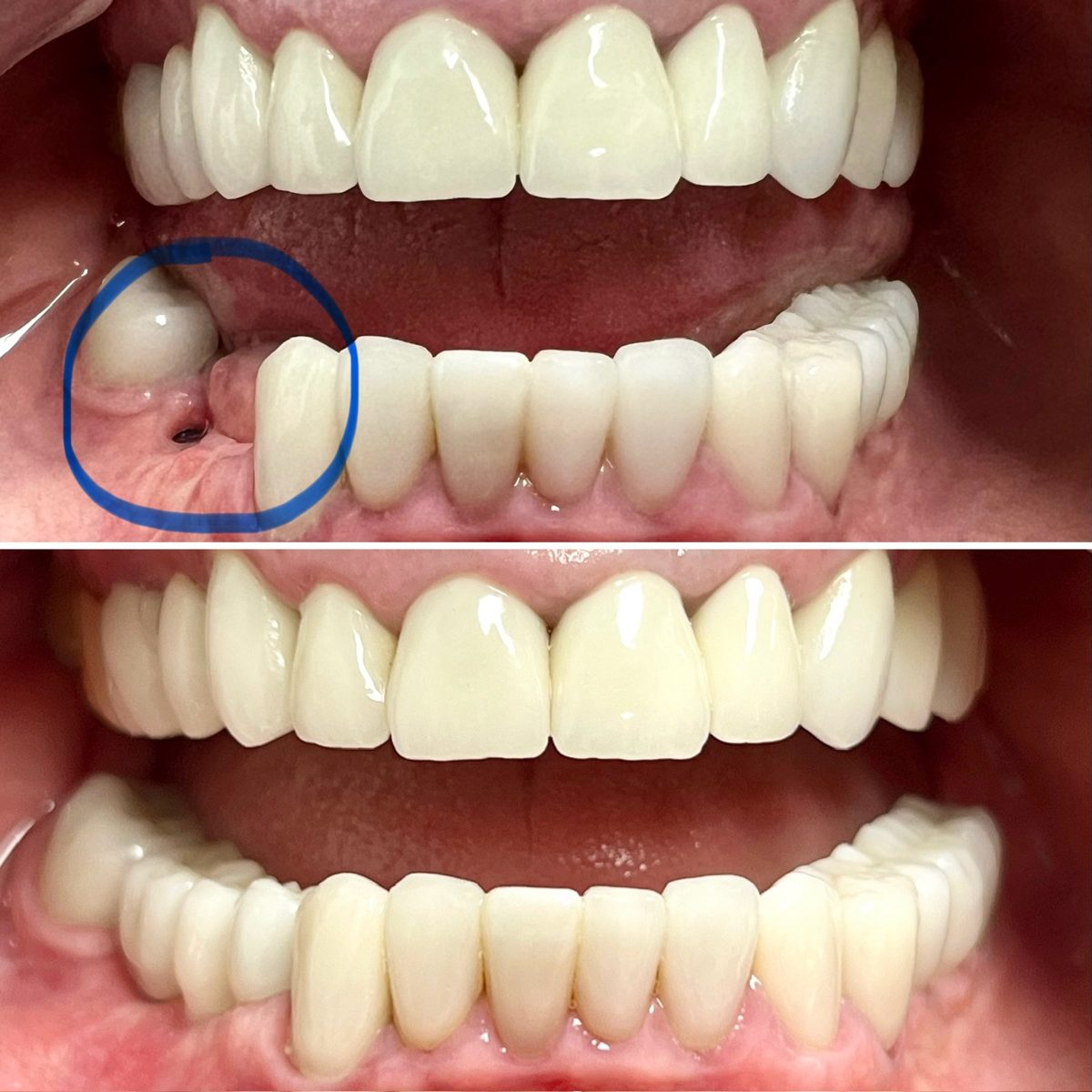
Why an Implant Bridge?
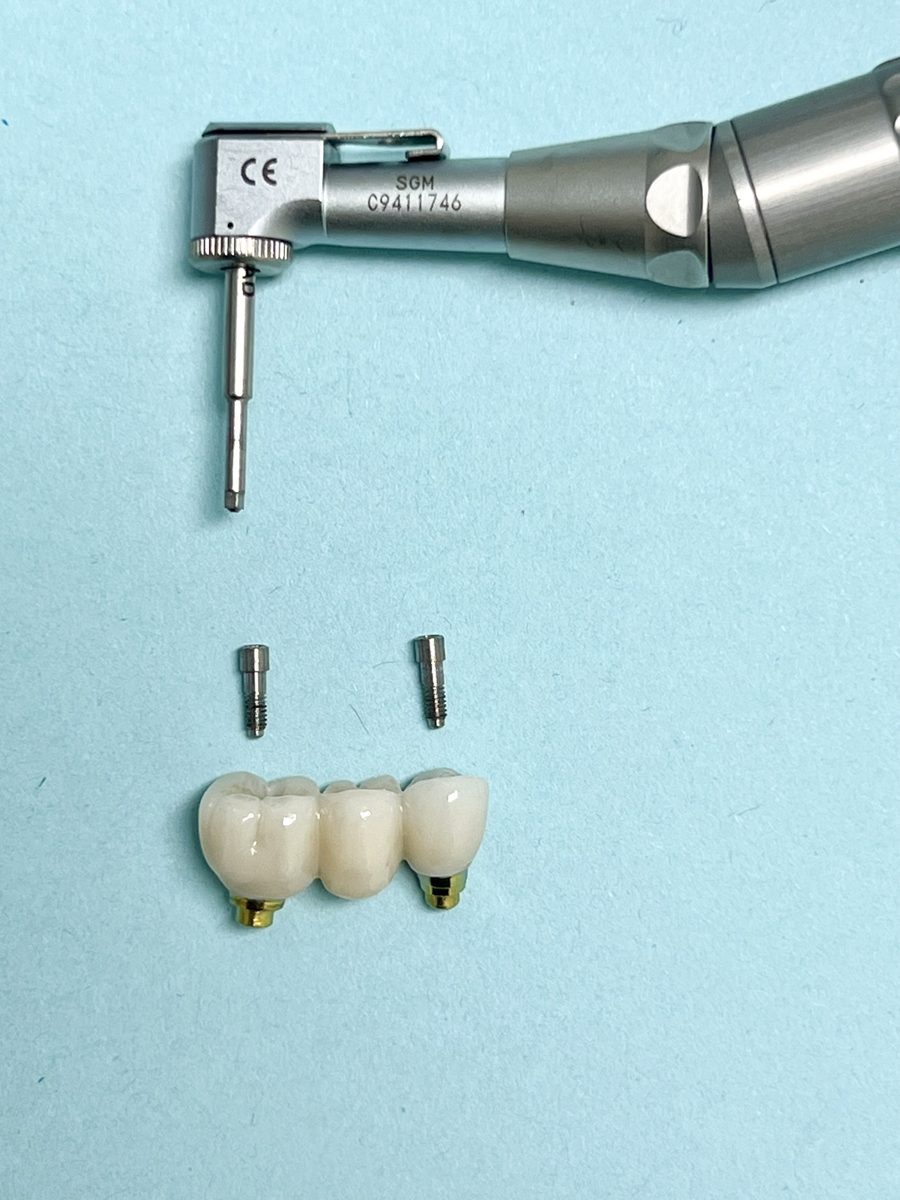
She was missing three teeth in a row on her lower right side (teeth #28 through #30). Instead of placing three separate implants, two Keystone Dental implants were placed, at #28 and #30, to support a three-tooth bridge: a tooth on each implant, with a replacement tooth at #29 in between. An implant bridge stands on its own, so the neighboring natural teeth do not have to be cut down to support it.
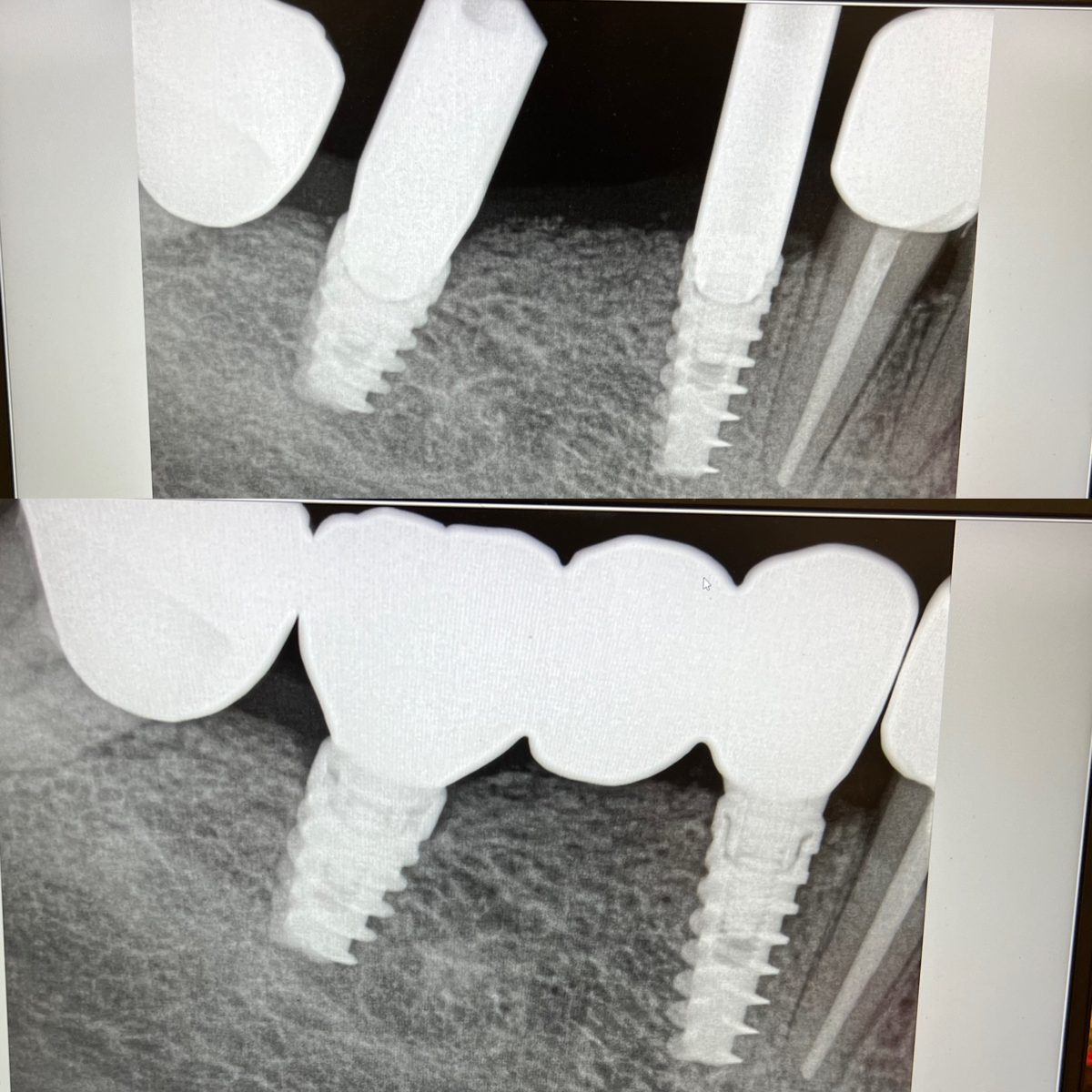
Digital Scan and Design
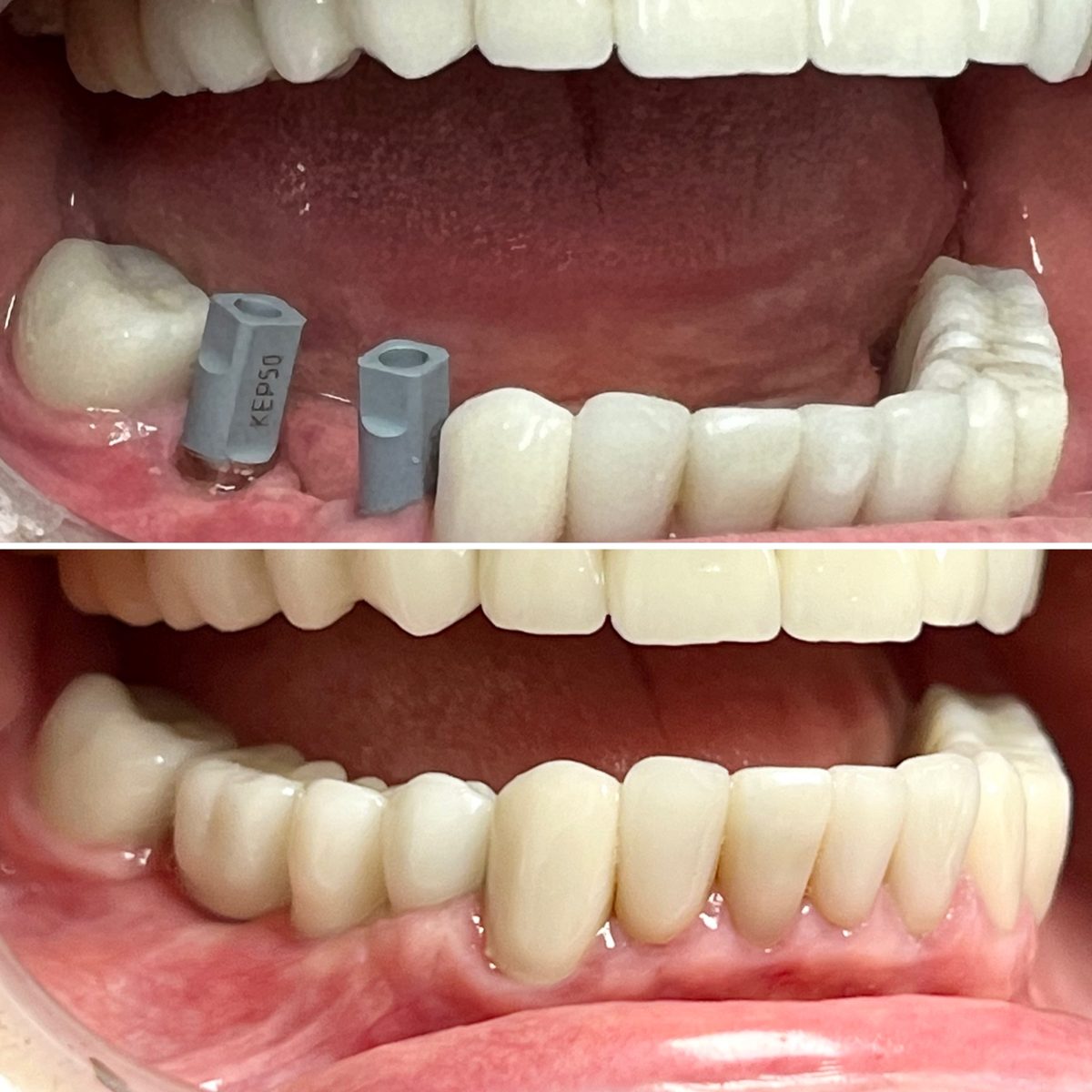
Visit 1: I attached scan bodies, small posts that show the exact position of each implant, and took a digital impression with my 3Shape TRIOS scanner. No messy impression trays.
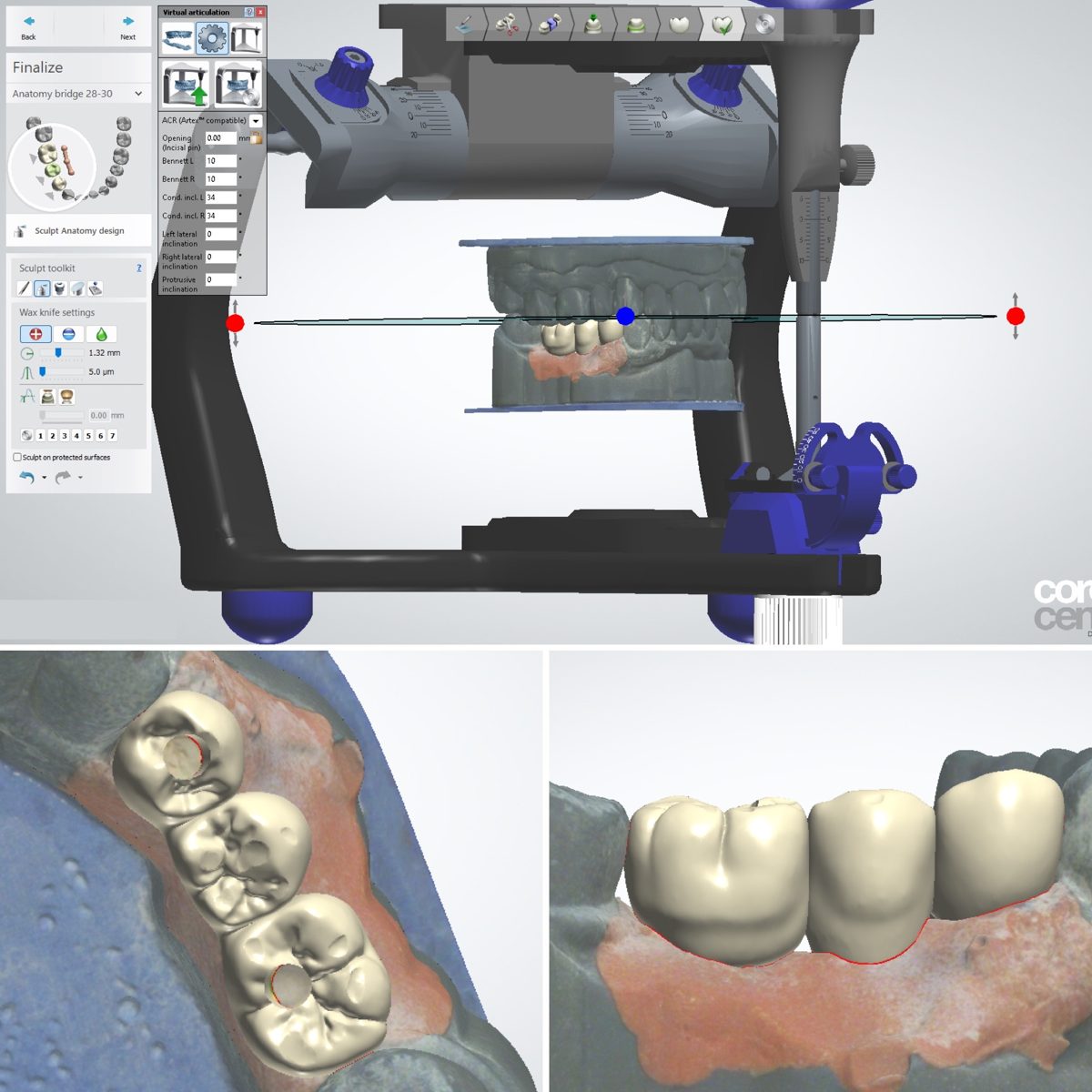
I then designed the bridge in exocad computer design software. I checked it on a virtual articulator, a digital model of her jaws and bite, to make sure the new teeth meet and move correctly with the teeth I had already restored.
A Zirconia Bridge in Two Visits
Visit 2: I placed her custom zirconia implant bridge. Zirconia is very strong, which matters for back teeth that do the heavy chewing. The bridge is attached to the implants with small screws, so it is secure, and it can be removed by a dentist if it ever needs care.
Technical Details for Dental Professionals
- Implants: Keystone Dental Prima Plus endosteal implants
- #28: 4.1 x 10 mm implant, 5 x 5 mm healing abutment
- #30: 5.0 x 8 mm implant, 6 x 5 mm healing abutment
- Scan bodies: mist titanium scan bodies for Keystone Prima, by Imagine Milling Technologies
- Digital workflow: 3Shape TRIOS intraoral scan, exocad design on a virtual articulator
- Restoration: screw-retained three-unit zirconia bridge, #28 to #30
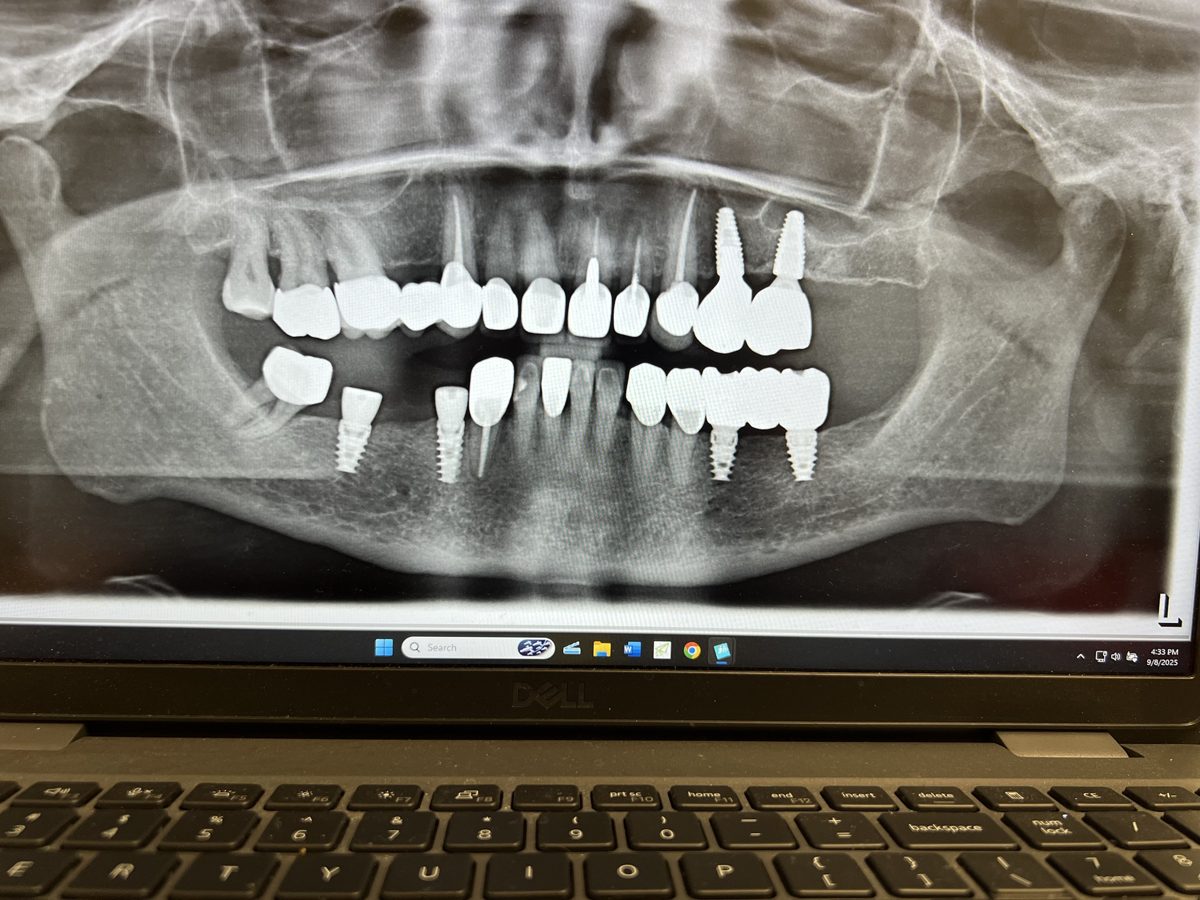
Panoramic X-ray
This panoramic x-ray shows her whole mouth just before I placed the final bridge. All of her other teeth had already been restored with crowns, veneers, and implant crowns and bridges. Planning every tooth as part of one smile is the kind of restorative dentistry I love most.
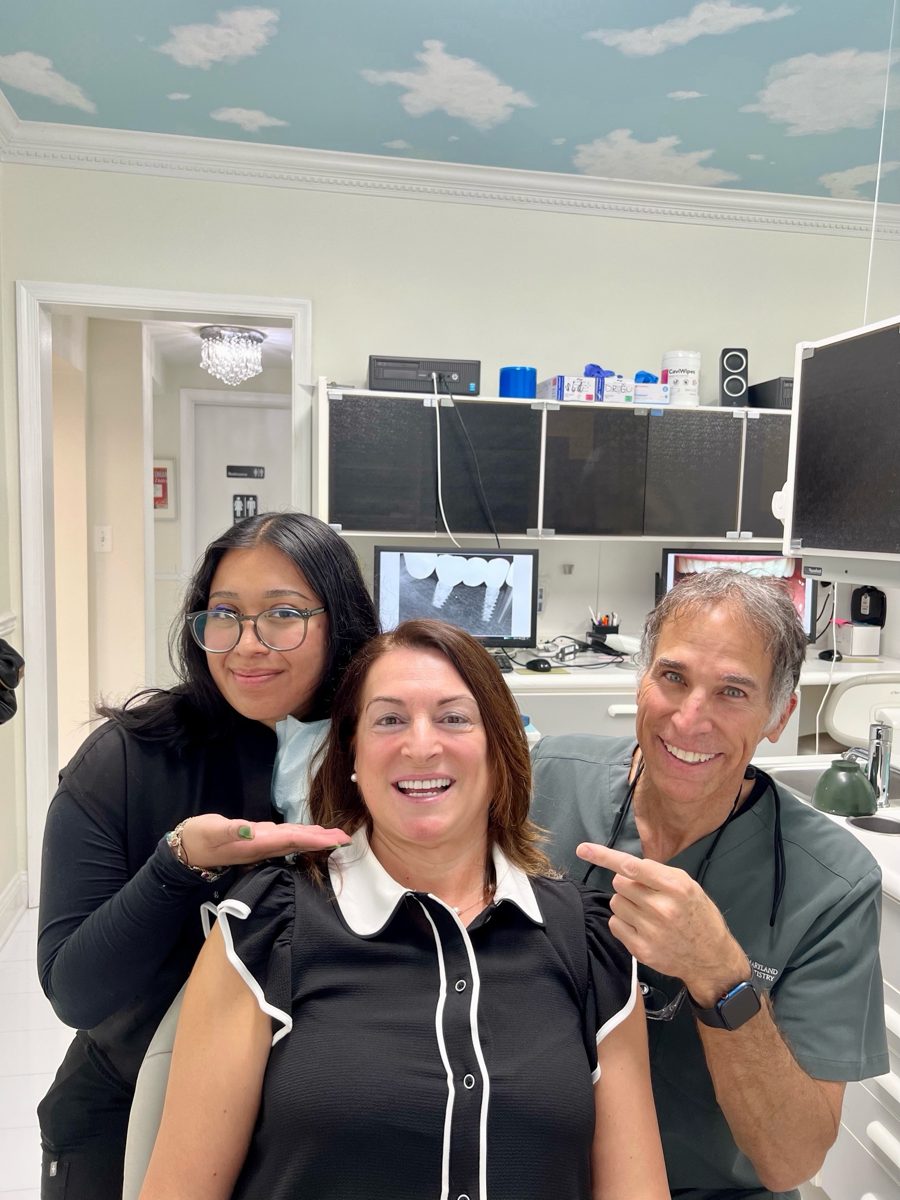
It was a fun Friday afternoon, the last patient of the week, and she looked and felt great. Just look at that smile!
Common Questions About Implant Bridges
What is an implant bridge?
An implant bridge replaces several missing teeth in a row. Instead of an implant for every tooth, two implants support a bridge that also carries a replacement tooth in between. It does not rely on your natural teeth for support.
How many implants do I need to replace three teeth?
Often two. In this case, two implants supported a three-tooth bridge. Your dentist decides the number based on your bone, your bite, and which teeth are missing.
Why is the bridge attached with screws?
A screw-retained implant bridge is held firmly in place but can be removed by your dentist if it ever needs care or repair, without damaging the bridge or the implants.
How many visits does an implant bridge take?
After the implants have healed, this bridge took two visits: one for the digital scan and design, and one to place the finished bridge.
What is a full-mouth restoration?
It is a plan to rebuild all or most of the teeth so they look good and work together as one healthy bite. It may combine crowns, veneers, implants, and bridges, often completed in stages.
How do I care for an implant bridge?
Brush twice a day and clean under the bridge every day with a floss threader, super floss, or a water flosser. Regular checkups and cleanings help keep the implants and gums healthy.
Every case photo on our website and blog shows my own patient, treated and photographed by me. We never use stock photos of dental work.
Missing teeth? Call Caring Dentists at 703-522-7733. We are at 1831 Wilson Boulevard in Arlington, two blocks from the Court House Metro. See more of my implant cases on our Dental Implants page.
Dr. Philip Gentry, DDS, FAGD, is a Fellow of the Academy of General Dentistry, a Washingtonian Magazine Top Dentist Hall of Fame honoree, and Clinical Assistant Professor at the University of Maryland School of Dentistry. He has practiced cosmetic, restorative, and family dentistry in Arlington, VA since 1989, with a special interest in crown and bridge, restorative, and reconstructive dentistry.